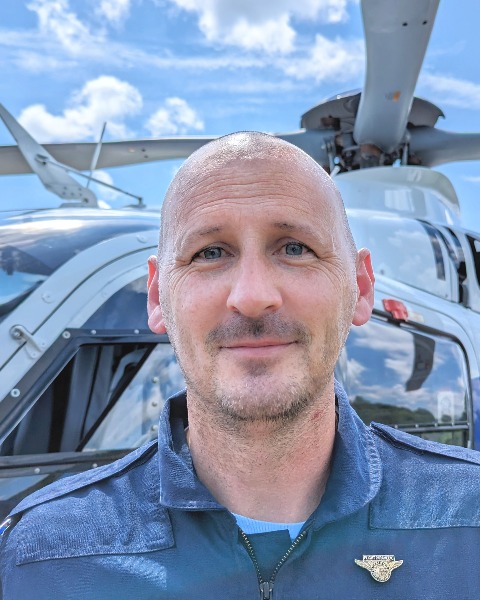
Flight Paramedic ECU Health East Care Edenton, North Carolina
Disclosure(s): No financial relationships to disclose
The distance between education and performance is bridged by experience, so the question becomes – how can we provide the best experience to others in hopes of promoting high performance? Simulation has become a valuable tool in the world of medical education and we have all had to run the gambit of various well thought out and exciting scenarios. How effective are these simulations in increasing knowledge and improving performance? This session will not only outline some practical exercises in designing medical simulations, but also how the human brain processes simulations and why creation and execution of an idea are just as important as the equipment that is used. This session will emphasize human cognition and learning – how does the brain work, how does the mind perceive new information, how is this information processed and organized, and what can we do to facilitate the application of new knowledge in stressful conditions? Educators must consider a number of variables when designing simulations, including the purpose of the time and the desired outcomes after time is up. This session will provide participants with an outline for developing meaningful educational simulations that promote teamwork, cooperative performance, and critical thinking. Practical strategies will be shared regarding the planning stage of simulation, the simulation itself, and the debrief.
Session Outline: This session will emphasize three essential components to every successful medical simulation: the pre-brief, the simulation itself, and the debrief. Additionally, participants will explore how the brain assimilates new knowledge with existing practice and how revelations discovered in simulation can be reinforced for performance in the real world. The presenter will utilize real-time surveys to promote discussion of the topics and share research to highlight best practices. At the end of the session, participants will feel confident in their ability to create medical simulations that are applicable and powerful. The presenter will not only share the science related to learning and performance, but also communication and team-building. It is the intent of the presenter to help others in their pursuit of excellent education so those who are providing patient care can feel empowered, supported, and prepared. Simulation is not just about discovering strange new pathologies, but also about reinforcing good habits and encouraging providers as they struggle with stress, death of their patients, and challenging team dynamics. 1. Cognition of Learning - 10 minutes 2. Prebrief - 15 minutes 3. Simulation - 10 minutes 4. Debrief - 15 minutes 5. Creating simulation plans - 10 minutes
Learning Objectives:
Outline the steps needed to create a simulation that is meaningful for clinicians. This pre-brief includes purposeful consideration of the intent of the simulation and communication with members involved
Create a simulation that is physiologically appropriate and responds to intervention appropriately. Maximum benefit is achieved when the learner can immerse themselves in the experience
Reflect on simulation debrief in a genuine and meaningful way. The simulation should be encouraging, supportive, and enlightening

.png)
.png)
.png)
.png)